

Adventures in Time and Space
On September 20th, 1979, a select group of children from Fairburn County Primary School
dressed up in 17th century garb and travelled to Wakefield to visit Clarke Hall, a genuine
17th century farmhouse just off the A642. Sporting a crafts room with working looms, a
kitchen with a spit roast over a roaring fire and a beautiful landscaped garden with a maze, it
was exactly the sort of place a seven-year-old boy would usually find extremely boring
(especially if he went traipsing round it with his family on a Sunday afternoon when he’d
rather be at home playing with his Star Wars figures). But this was a living museum and we
were all dressed up like 17th century peasants, so I absolutely loved it. Every detail of the
experience was designed to make us feel like we were actually living in the past - volunteers
dressed as kitchen wenches, lunch cooked in a genuine 17th century fireplace, actors
pretending to be the historical owners of the hall while using strange words like “morrow”
and “pewter”.
Late in the afternoon, an actor calling himself “Benjamin Clarke” sat us down in his drawing
room and told us the story of how he hid his cousin, a priest called Martin, from some
naughty men who wanted to capture him for some reason or other. I remember being
utterly enthralled with it, especially with the idea of having secret hiding places within one’s
own house. I’d always dreamt of having a secret tunnel that went from my house to some
other exciting location, and a priest hole was definitely that kind of thing. What made the
story doubly exciting was that Benjamin was able to show us the actual hidey-hole, with its
secret room beyond. I’m not sure I appreciated the full historical context of the story or why
a bunch of men might want to capture a priest, but I did understand that the past was a
strange place full of weird people who did bad things, and it would have been horrible
because there was no telly. Still, having a priest hole in my bedroom might have made up for
it.
Back at school the following day, I was given a brand new exercise book and asked to write
out Benjamin Clarke’s story from memory. How much detail I’ve omitted or invented I can’t
say, but what’s written here is probably the basic gist. There’s nothing particularly
remarkable about this piece - a few spelling mistakes here and there and a touch of
Yorkshire phrasing: “That Martin!!” But otherwise it’s very ordinary - not especially funny or
creative, nor does it reveal much about my life. It’s not even my story. But it’s here on this
website because it’s the first thing I wrote in my first English book at Fairburn School, and
that’s a good place to start.
OK, I suppose there are a few things to say about it:
1. There are no paragraphs
I’d seen such things in books, but didn’t know what they were called and certainly wasn’t
required to use them until much later in life. None of the Fairburn books use paragraphs,
nor do they feature any joined up writing. Originally, when I first started planning to make
this stuff more widely available, I typed the work up (a process which spanned several years)
and, as a way of making it more readable, formatted it all into paragraphs, with proper
spelling and punctuation and everything. Then it dawned on me that the bad spelling and
crude handwriting are all part of the fun. So now you get to see the original, warts and all,
lucky you.
2. Margins were a new concept to me
At my previous school, I hadn’t used margins, instead just scrawling all over the page as I saw
fit. The wonky, wobbly margin on this page (and throughout the book) is testament to that. I
love how the top half of the margin is obviously drawn with a ruler, but I clearly couldn’t be
bothered to lower it to complete the bottom half and instead drew the rest of the margin
freehand. I remember these things being really annoying. The fact that I wasn’t used to using
margins becomes even more obvious when you look at Page 3, where I clearly started
writing without a margin, then realised my mistake, erased the original text and started
again.
3. Rubbers weren’t allowed
There aren’t any obvious examples in this piece, but erasers weren’t allowed at Fairburn
School. Nor were we allowed to cross out mistakes. Instead, we were encouraged to place
mistakes in brackets, so the teacher could clearly see them. Much neater than crossing out,
yes (but potentially confusing if you wanted to use brackets properly). Naturally, this took me
some time to get the hang of. I’m not sure whether this explains why the words “window” (on
Page 1) and “could” (on Page 3) have been circled. Perhaps they are words which I originally
erased and then needed to point out to Mr Geraghty? Which leads me to...
4. Strange markings in the text
There are asterisks on Page 1 and Page 2 which appear to have been added later (slightly
different pencil quality in each case). I wonder if this was to mark out a passage for me to
read in assembly? There are also a few odd vertical lines scattered throughout the story
which I don’t quite understand. They could be paragraph markers, but that wouldn’t make
much sense, since I didn’t use paragraphs. Some of them are crossed out as well, which
definitely wasn’t allowed! Anyone any ideas?
5. I knew there had been more than 1,979 years
The date on Page 1 is written as “Friday 21st September 1979 A.D.” It’s possible the “A.D.”
may have been added later, but not much later, since it only appears after the first few dates
in the book. What this suggests is that I was very proud that I knew what “A.D.” meant and
wanted to show off about my superior knowledge as often as possible. I was a big fan of the
comic 2000 AD, which is probably how that knowledge came about (that and me asking
“What does A.D. mean, Mum?”) Whether I’d actually got around to questioning the validity of
basing our calendar on the birth of Jesus, I don’t know. I doubt it. But that moment would
definitely come before I left Fairburn.
6. I’m impressed with the spelling and punctuation
No, I couldn’t spell “preist” and I’ve somehow given “suddennly” two N’s. I can’t spell “Precilla”
at the beginning of the story, but somehow by Page 2, I can. I like exclamation marks way too
much (“That Preist!!!!”) and question marks too (“What preist????”). I spell “Rats” with a capital
R, “Man” with a capital M and “Preist” with a capital P (something I did quite often - was I
German in a past life?). But I was seven years old! Give me a break! I wasn’t taught about “its”
and “it’s” till I was eleven but I definitely know how to do it here. I can spell “cupboard” and
“whistled” and “scratching” and “different”. In short, I was pretty good at it. No wonder my
parents wanted me moved up a year. Woo, go me!
7. What was Benjamin’s tune again?
When the Men finally arrive at Clarke Hall looking for That Martin, Benjamin alerts Priscilla
by whistling “his tune”. No idea what that’s about - it wasn’t set up beforehand. Nor do I
understand why Benjamin had to give three secret knocks when in fact the tune and the
scream would have been warning enough. I’m also pretty certain that a curious whistled
tune followed by a conspicuous scream and a blatant secret knock on a dubious hollow
panel would have alerted the pursuers to the possibility of something fishy going on. Fair
play to me, the Men did actually spot Martin as he made his escape, and it wasn’t my story
anyway. But I find myself being rather concerned for Benjamin’s eventual fate - if the Men
were after That Martin purely because he was a Catholic priest, then surely they would come
back later and arrest Benjamin for the treasonable offence of harbouring him. Perhaps
Benjamin was actually a pathological liar and none of this really happened? And while we’re
at it, what’s all this “scratching at the window” nonsense? If Martin was going to enter
through the door anyway, why didn’t he just knock? And if Martin could evade the Men by
riding to Sandal instead of York, why didn’t he just go to Sandal in the first place? Aaarrgh, it’s
so frustrating!!!!
Some Other Stuff to Say
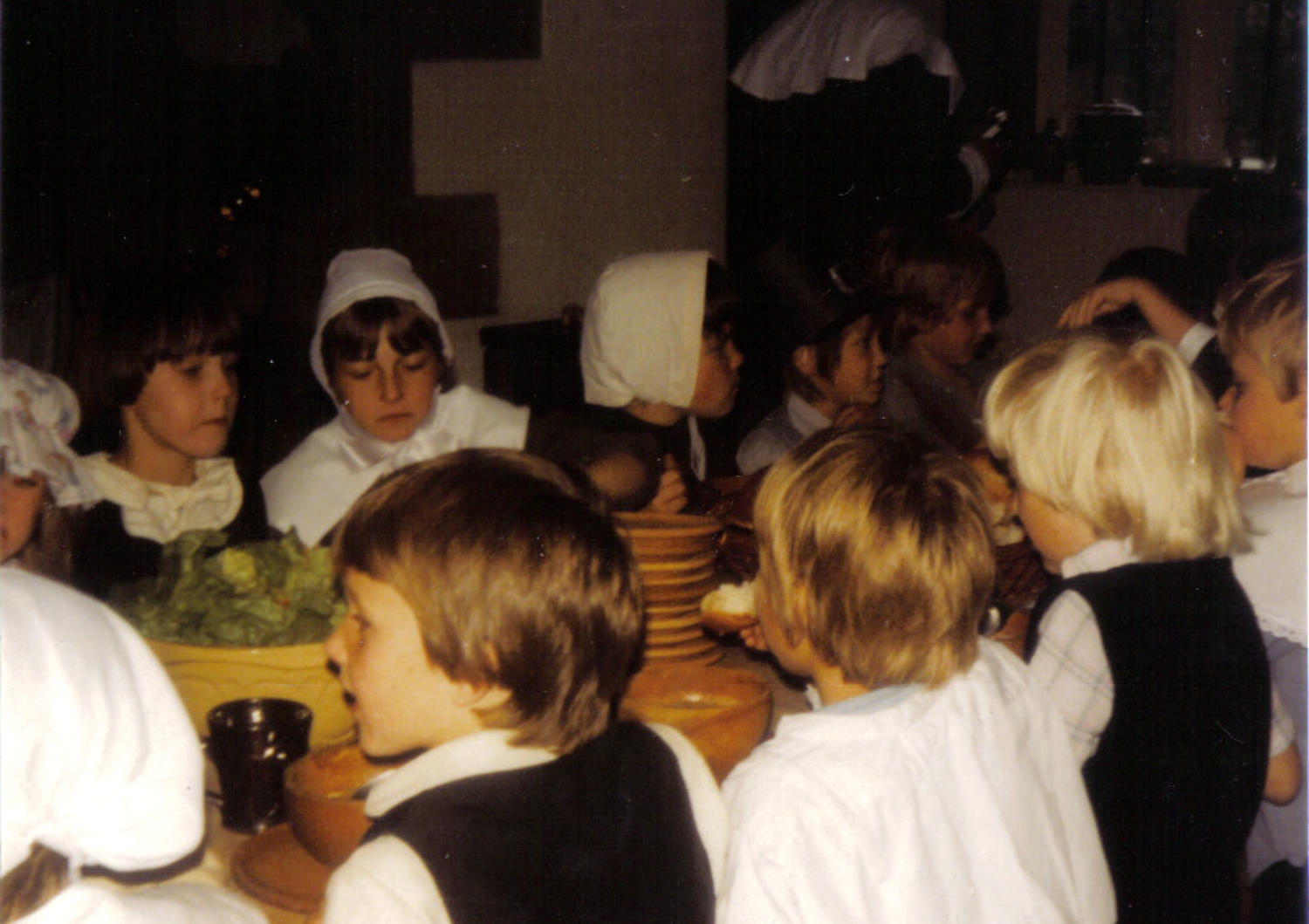
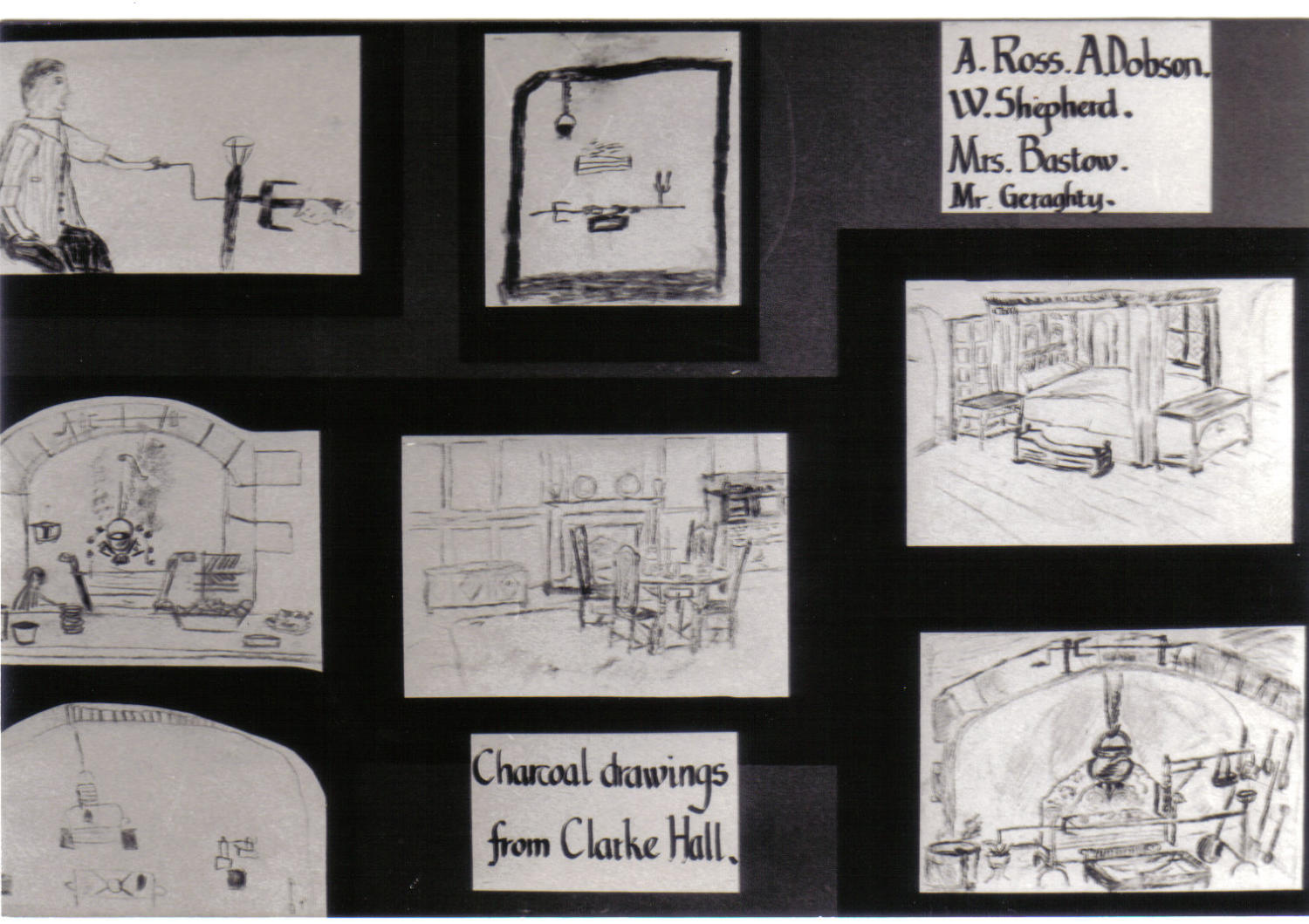
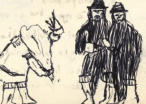
The Clarke Hall trip also spawned a number of photographs, which I’ve somehow
miraculously managed to keep and can be found at the top of the page. It’s clear from these
pictures that not everyone from the school went on the trip. It may in fact only have been
open to those pupils whose parents could be bothered to kit them out in mock 17th century
clothes. Or maybe they were just ill? Notably, Carl Clayton, Mark Hudson and Darren Ridley
are missing from the congregated group of boys. There may be others I’ve simply forgotten.
Also, though most of the boys in the photo were in the junior class, I’m pretty sure Paul
Mattison (bottom left in the top two pics) was in the infants class. So I suppose most of the
younger boys are conspicuously absent too.
I tend to remember my first term at Fairburn as a difficult time. I was in a new house, a new
town and a new school, living and working alongside people I didn’t know. A quick glimpse at
the timeline I’ve created will show how grim the culture was: IRA bombs, hyper-inflation,
wars, hostage crises, Yorkshire Ripper murders and endless strikes were the order of the
day. There were only two channels on TV for most of the term and they weren’t showing
much I was interested in. The rest of the term’s work, as I’m sure you’ll see if you read on, is
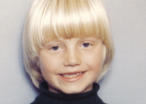
very cautious compared with everything I did afterwards. But look at me on the fourth photo
down and at least I’m smiling. Still, my arms are folded, whatever that might mean.
By sheer coincidence, I visited Clarke Hall a second time within the first few weeks of
attending another primary school in Pontefract in the summer of 1982. That time, all I
remember is that my teacher, Mrs Walters, introduced us all as having travelled “from
Pomfret” (an old name for Pontefract used in Shakespeare’s Richard III). Thanks to the
photographs and the English book, my memories of the first trip are much clearer.
Clarke Hall on the Web
When I first wrote this article in 2010, Clarke Hall was still an active working museum,
welcoming school parties and hosting events programmed by the Friends of Clarke Hall. You
could even book “Benjamin Clarke” to visit your school.
Unfortunately, since then, the site was closed and put up for sale, ostensibly due to council
spending cuts. Since then it has been restored and was put back on the market in 2018 at a
price of £850,000. If that sounds too steep, don’t worry - you can rent an office there for
£6000 a year. Because it’s been converted into offices. Converted. Into. Offices.
Clarke Hall

SOUVENIR PHOTOS






HISTORY 1
Sept 1979 - Oct 1981
SCIENCE 1
Sept 1979 - Mar 1980
GEOGRAPHY 1
Sept 1979 - Feb 1981

Clarke Hall
Old Houses
Fairburn v Burton Salmon
The Forgotten World
String Orchestra
Sheet Lightning
Grezelda the Witch
Bonfire Night
Metropolitan Police
Christmas 1979
Great Space Battles
Luddenden
The Hat’s Adventure
Sleeping Beauty
What I Do On Monday
Waen Shepherd 2
Waen Shepherd in: Green Squids
Ward’s 7: Move of the Galaxy
Ward’s 7: Alpha Centauri
Ward’s 7: Escape to Mother Ship
Ward’s 7: Death Planet
Blake’s 7
Ward’s 7: The Hunt
The Flame in the Desert
The Fugitive
British Skiing Events
Ward’s 7: Rescue
Fiends of the Eastern Front
Black Hawk Profile
Apeth (from Outer Space!)
Tedosaurus (from Prehistoric Time!)
A Walk in Our Village
The Mountain Called Tyrannosaurus Rex
Florence Nightingale
War of the Worlds
The Micronauts in: Supersilver




- ENGLISH
- ENGLISH 1
- English 1: Overview
- Clarke Hall
- Old Houses
- Fairburn v Burton Salmon
- The Forgotten World
- String Orchestra
- Sheet Lightning
- Grezelda the Witch
- Bonfire Night
- Metropolitan Police
- Christmas 1979
- Great Space Battles
- Luddenden
- The Hat's Adventure
- Sleeping Beauty
- What I Do On Monday
- Waen Shepherd 2
- Waen Shepherd in: Green Squids
- Ward's 7: Move of the Galaxy
- Ward's 7: Alpha Centauri
- Ward's 7: Escape to Mother Ship
- Ward's 7: Death Planet
- Blake's 7
- Ward's 7: The Hunt
- The Flame in the Desert
- The Fugitive
- British Skiing Events
- Ward's 7: Rescue
- Fiends of the Eastern Front
- Black Hawk Profile
- Apeth
- Tedosaurus
- A Walk in Our Village
- The Mountain Called Tyrannosaurus Rex
- Florence Nightingale
- War of the Worlds
- The Micronauts: Supersilver
- ENGLISH 2


- TOPIC
- TOPIC 1
- TOPIC 2
- Topic 2: Overview
- Dinosaurs 1
- Space Travel
- Ships
- Sport
- Dinosaurs 2
- Judge Dredd: The Blood of Satanus
- Captain Carnivore
- A-Maze-ing!
- Star Poster: Super Jesus
- The Micronauts: Giant Karza
- The Origin of Electro
- Optical Illusion Time
- Frantic Thingies
- Men in Space
- Topic Book Word Find
- Puzzleman
- Evel Knievel: Fury Falls
- More Puzzlers
- Star Poster: The Hulk (1)
- Grobschnitt's Page
- Captain Starlight
- Star Poster: The Hulk (2)
- The Yellyog Gang
- The Adventures of Puzzlemaster
- Jupe
- Woman Line
- Pin-Up: Doctor Doom
- Lazer Lash
- The Human Maze
- Three Squares
- Raven Mad
- Marvel Sketches
- Robschnitt's Age: 1
- Snotty Notty


- AND THE REST: An overview
- ODDS & ENDS
- HISTORY 1
- History 1: Overview
- People in the Old Stone Age 1
- Guy Fawkes
- People in the Old Stone Age 2
- People in the Old Stone Age 3
- The New Stone Age
- People of the Bronze Age
- The Story of Nelson 1
- The Story of Nelson 2
- The Story of Nelson 3
- Florence Nightingale
- The Story of Nelson 4
- The Story of Nelson 5
- The Story of Nelson 6
- The Story of Nelson 7
- SCIENCE 1
- GEOGRAPHY 1
- BIOGRAPHICAL NOTES


Adventures in Time and Space
On September 20th, 1979, a select group of children
from Fairburn County Primary School dressed up in
17th century garb and travelled to Wakefield to visit
Clarke Hall, a genuine 17th century farmhouse just
off the A642. Sporting a crafts room with working
looms, a kitchen with a spit roast over a roaring fire
and a beautiful landscaped garden with a maze, it
was exactly the sort of place a seven-year-old boy
would usually find extremely boring (especially if he
went traipsing round it with his family on a Sunday
afternoon when he’d rather be at home playing with
his Star Wars figures). But this was a living museum
and we were all dressed up like 17th century
peasants, so I absolutely loved it. Every detail of the
experience was designed to make us feel like we
were actually living in the past - volunteers dressed
as kitchen wenches, lunch cooked in a genuine 17th
century fireplace, actors pretending to be the
historical owners of the hall while using strange
words like “morrow” and “pewter”.
Late in the afternoon, an actor calling himself
“Benjamin Clarke” sat us down in his drawing room
and told us the story of how he hid his cousin, a
priest called Martin, from some naughty men who
wanted to capture him for some reason or other. I
remember being utterly enthralled with it, especially
with the idea of having secret hiding places within
one’s own house. I’d always dreamt of having a secret
tunnel that went from my house to some other
exciting location, and a priest hole was definitely that
kind of thing. What made the story doubly exciting
was that Benjamin was able to show us the actual
hidey-hole, with its secret room beyond. I’m not sure I
appreciated the full historical context of the story or
why a bunch of men might want to capture a priest,
but I did understand that the past was a strange
place full of weird people who did bad things, and it
would have been horrible because there was no telly.
Still, having a priest hole in my bedroom might have
made up for it.
Back at school the following day, I was given a brand
new exercise book and asked to write out Benjamin
Clarke’s story from memory. How much detail I’ve
omitted or invented I can’t say, but what’s written
here is probably the basic gist. There’s nothing
particularly remarkable about this piece - a few
spelling mistakes here and there and a touch of
Yorkshire phrasing: “That Martin!!” But otherwise it’s
very ordinary - not especially funny or creative, nor
does it reveal much about my life. It’s not even my
story. But it’s here on this website because it’s the
first thing I wrote in my first English book at Fairburn
School, and that’s a good place to start.
OK, I suppose there are a few things to say about it:
1. There are no paragraphs
I’d seen such things in books, but didn’t know what
they were called and certainly wasn’t required to use
them until much later in life. None of the Fairburn
books use paragraphs, nor do they feature any joined
up writing. Originally, when I first started planning to
make this stuff more widely available, I typed the
work up (a process which spanned several years)
and, as a way of making it more readable, formatted
it all into paragraphs, with proper spelling and
punctuation and everything. Then it dawned on me
that the bad spelling and crude handwriting are all
part of the fun. So now you get to see the original,
warts and all, lucky you.
2. Margins were a new concept to me
At my previous school, I hadn’t used margins, instead
just scrawling all over the page as I saw fit. The
wonky, wobbly margin on this page (and throughout
the book) is testament to that. I love how the top half
of the margin is obviously drawn with a ruler, but I
clearly couldn’t be bothered to lower it to complete
the bottom half and instead drew the rest of the
margin freehand. I remember these things being
really annoying. The fact that I wasn’t used to using
margins becomes even more obvious when you look
at Page 3, where I clearly started writing without a
margin, then realised my mistake, erased the original
text and started again.
3. Rubbers weren’t allowed
There aren’t any obvious examples in this piece, but
erasers weren’t allowed at Fairburn School. Nor were
we allowed to cross out mistakes. Instead, we were
encouraged to place mistakes in brackets, so the
teacher could clearly see them. Much neater than
crossing out, yes (but potentially confusing if you
wanted to use brackets properly). Naturally, this took
me some time to get the hang of. I’m not sure
whether this explains why the words “window” (on
Page 1) and “could” (on Page 3) have been circled.
Perhaps they are words which I originally erased and
then needed to point out to Mr Geraghty? Which
leads me to...
4. Strange markings in the text
There are asterisks on Page 1 and Page 2 which
appear to have been added later (slightly different
pencil quality in each case). I wonder if this was to
mark out a passage for me to read in assembly?
There are also a few odd vertical lines scattered
throughout the story which I don’t quite understand.
They could be paragraph markers, but that wouldn’t
make much sense, since I didn’t use paragraphs.
Some of them are crossed out as well, which
definitely wasn’t allowed! Anyone any ideas?
5. I knew there had been more than 1,979 years
The date on Page 1 is written as “Friday 21st
September 1979 A.D.” It’s possible the “A.D.” may
have been added later, but not much later, since it
only appears after the first few dates in the book.
What this suggests is that I was very proud that I
knew what “A.D.” meant and wanted to show off
about my superior knowledge as often as possible. I
was a big fan of the comic 2000 AD, which is probably
how that knowledge came about (that and me asking
“What does A.D. mean, Mum?”) Whether I’d actually
got around to questioning the validity of basing our
calendar on the birth of Jesus, I don’t know. I doubt it.
But that moment would definitely come before I left
Fairburn.
6. I’m impressed with the spelling and
punctuation
No, I couldn’t spell “preist” and I’ve somehow given
“suddennly” two N’s. I can’t spell “Precilla” at the
beginning of the story, but somehow by Page 2, I can.
I like exclamation marks way too much (“That
Preist!!!!”) and question marks too (“What preist????”).
I spell “Rats” with a capital R, “Man” with a capital M
and “Preist” with a capital P (something I did quite
often - was I German in a past life?). But I was seven
years old! Give me a break! I wasn’t taught about “its”
and “it’s” till I was eleven but I definitely know how to
do it here. I can spell “cupboard” and “whistled” and
“scratching” and “different”. In short, I was pretty
good at it. No wonder my parents wanted me moved
up a year. Woo, go me!
7. What was Benjamin’s tune again?
When the Men finally arrive at Clarke Hall looking for
That Martin, Benjamin alerts Priscilla by whistling “his
tune”. No idea what that’s about - it wasn’t set up
beforehand. Nor do I understand why Benjamin had
to give three secret knocks when in fact the tune and
the scream would have been warning enough. I’m
also pretty certain that a curious whistled tune
followed by a conspicuous scream and a blatant
secret knock on a dubious hollow panel would have
alerted the pursuers to the possibility of something
fishy going on. Fair play to me, the Men did actually
spot Martin as he made his escape, and it wasn’t my
story anyway. But I find myself being rather
concerned for Benjamin’s eventual fate - if the Men
were after That Martin purely because he was a
Catholic priest, then surely they would come back
later and arrest Benjamin for the treasonable offence
of harbouring him. Perhaps Benjamin was actually a
pathological liar and none of this really happened?
And while we’re at it, what’s all this “scratching at the
window” nonsense? If Martin was going to enter
through the door anyway, why didn’t he just knock?
And if Martin could evade the Men by riding to
Sandal instead of York, why didn’t he just go to
Sandal in the first place? Aaarrgh, it’s so frustrating!!!!
Some Other Stuff to Say
The Clarke Hall trip also spawned a number of
photographs, which I’ve somehow miraculously
managed to keep and can be found at the top of the
page. It’s clear from these pictures that not everyone
from the school went on the trip. It may in fact only
have been open to those pupils whose parents could
be bothered to kit them out in mock 17th century
clothes. Or maybe they were just ill? Notably, Carl
Clayton, Mark Hudson and Darren Ridley are missing
from the congregated group of boys. There may be
others I’ve simply forgotten. Also, though most of the
boys in the photo were in the junior class, I’m pretty
sure Paul Mattison (bottom left in the top two pics)
was in the infants class. So I suppose most of the
younger boys are conspicuously absent too.
I tend to remember my first term at Fairburn as a
difficult time. I was in a new house, a new town and a
new school, living and working alongside people I
didn’t know. A quick glimpse at the timeline I’ve
created will show how grim the culture was: IRA
bombs, hyper-inflation, wars, hostage crises,
Yorkshire Ripper murders and endless strikes were
the order of the day. There were only two channels
on TV for most of the term and they weren’t showing
much I was interested in. The rest of the term’s work,
as I’m sure you’ll see if you read on, is very cautious
compared with everything I did afterwards. But look
at me on the fourth photo down and at least I’m
smiling. Still, my arms are folded, whatever that
might mean.
By sheer coincidence, I visited Clarke Hall a second
time within the first few weeks of attending another
primary school in Pontefract in the summer of 1982.
That time, all I remember is that my teacher, Mrs
Walters, introduced us all as having travelled “from
Pomfret” (an old name for Pontefract used in
Shakespeare’s Richard III). Thanks to the photographs
and the English book, my memories of the first trip
are much clearer.
Clarke Hall on the Web
When I first wrote this article in 2010, Clarke Hall was
still an active working museum, welcoming school
parties and hosting events programmed by the
Friends of Clarke Hall. You could even book
“Benjamin Clarke” to visit your school.
Unfortunately, since then, the site was closed and put
up for sale, ostensibly due to council spending cuts.
Since then it has been restored and was put back on
the market in 2018 at a price of £850,000. If that
sounds too steep, don’t worry - you can rent an office
there for £6000 a year. Because it’s been converted
into offices. Converted. Into. Offices.
Clarke Hall


SOUVENIR PHOTOS

TOPIC 1
Sept-Dec 1979
HISTORY 1
Sept 1979 - Oct 1981
SCIENCE 1
Sept 1979 - Mar 1980


- ENGLISH
- ENGLISH 1
- English 1: Overview
- Clarke Hall
- Old Houses
- Fairburn v Burton Salmon
- The Forgotten World
- String Orchestra
- Sheet Lightning
- Grezelda the Witch
- Bonfire Night
- Metropolitan Police
- Christmas 1979
- Great Space Battles
- Luddenden
- The Hat's Adventure
- Sleeping Beauty
- What I Do On Monday
- Waen Shepherd 2
- Waen Shepherd in: Green Squids
- Ward's 7: Move of the Galaxy
- Ward's 7: Alpha Centauri
- Ward's 7: Escape to Mother Ship
- Ward's 7: Death Planet
- Blake's 7
- Ward's 7: The Hunt
- The Flame in the Desert
- The Fugitive
- British Skiing Events
- Ward's 7: Rescue
- Fiends of the Eastern Front
- Black Hawk Profile
- Apeth
- Tedosaurus
- A Walk in Our Village
- The Mountain Called Tyrannosaurus Rex
- Florence Nightingale
- War of the Worlds
- The Micronauts: Supersilver
- ENGLISH 2


- TOPIC
- TOPIC 1
- TOPIC 2
- Topic 2: Overview
- Dinosaurs 1
- Space Travel
- Ships
- Sport
- Dinosaurs 2
- Judge Dredd: The Blood of Satanus
- Captain Carnivore
- A-Maze-ing!
- Star Poster: Super Jesus
- The Micronauts: Giant Karza
- The Origin of Electro
- Optical Illusion Time
- Frantic Thingies
- Men in Space
- Topic Book Word Find
- Puzzleman
- Evel Knievel: Fury Falls
- More Puzzlers
- Star Poster: The Hulk (1)
- Grobschnitt's Page
- Captain Starlight
- Star Poster: The Hulk (2)
- The Yellyog Gang
- The Adventures of Puzzlemaster
- Jupe
- Woman Line
- Pin-Up: Doctor Doom
- Lazer Lash
- The Human Maze
- Three Squares
- Raven Mad
- Marvel Sketches
- Robschnitt's Age: 1
- Snotty Notty


- AND THE REST: An overview
- ODDS & ENDS
- HISTORY 1
- History 1: Overview
- People in the Old Stone Age 1
- Guy Fawkes
- People in the Old Stone Age 2
- People in the Old Stone Age 3
- The New Stone Age
- People of the Bronze Age
- The Story of Nelson 1
- The Story of Nelson 2
- The Story of Nelson 3
- Florence Nightingale
- The Story of Nelson 4
- The Story of Nelson 5
- The Story of Nelson 6
- The Story of Nelson 7
- SCIENCE 1
- GEOGRAPHY 1
- BIOGRAPHICAL NOTES